(Macao) — Nasdaq-listed Zenta Group (Stock Code: ZTG hereinafter referred to as "Zenta Group") today announced its full commitment to the "2026 Policy Address of the Government of the Macao Special Administrative Region" and the key deployment of the economic and financial sector. The future core strategy will be "AI + Macao Application Scenarios" , with plans to significantly increase resource allocation and establish local research, development, and productization teams in Macao. The group will prioritize the implementation of AI solutions in sectors such as hotels and integrated resorts, banking and finance, tourism and MICE (Meetings, Incentives, Conferences, and Exhibitions), as well as retail and SME digitalization , supporting the SAR Government's push for digital economy and smart city development.
Policy and Urban Context: Macao as a Natural Testbed for "AI + Scenarios"
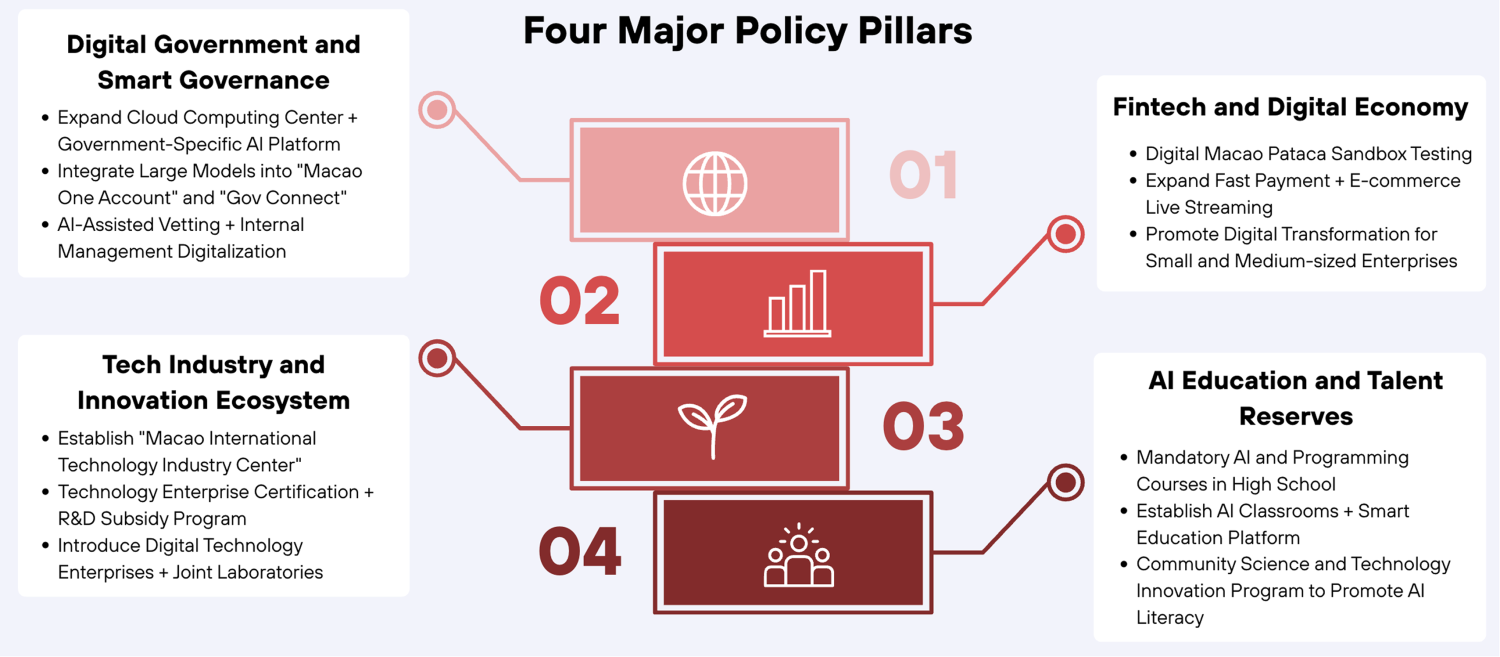
The "2026 Policy Address" indicates that Macao will "deepen the construction of e-government," which includes expanding the cloud computing center, developing backup construction for critical services, "improving infrastructure to deploy artificial intelligence, and building a government-specific intelligent service platform," while continuously advancing the electronification of internal government management. The administrative and legal affairs sector also proposed to "empower with artificial intelligence" in the "GovPass" platform , integrating AI-assisted applications in various stages of internal management , and exploring the use of AI to assist in reviewing candidate academic qualifications to reduce extensive manual work and enhance administrative efficiency.
At the industrial level, the key policy deployment for the economic and financial sector explicitly proposes:
Promoting FinTech development, enhancing the Faster Payment System (FPS) function, expanding the scope of "Easy Transfer" service, and initiating a "Digital Macao Pataca" sandbox test , extending its application to e-government and public service payment scenarios.
Accelerating the development of the digital economy, including advancing "digital economy" statistics and trial calculations , and encouraging SMEs to leverage cross-border e-commerce and livestreaming to expand their markets.
Establishing the "Macao International Technology Industry Center," continuously implementing the Technology Enterprise Certification Program and the Enterprise Innovation R&D Funding Scheme , supporting key technology enterprises in undertaking large R&D projects, and establishing joint laboratories in collaboration with higher education institutions.
Regarding the Macao Science and Technology Research and Development Industrial Park, emphasis is placed on front-loading deployment around the overall planning of major projects , focusing on introducing enterprises in integrated circuits, biomedicine, digital technology, and aerospace technology , and constructing an information database for technology enterprises to optimize the technology investment attraction mechanism.
In education and talent, the Policy Address proposes to "expand general AI education," incorporating programming and AI education into the senior secondary curriculum requirements , launching the "Macao Smart Education Platform," and establishing special funding for schools to equip AI classrooms (artificial intelligence experimental classrooms) , while promoting general AI education in the community through science and technology innovation programs.
On the macroeconomic front, the preliminary value of Macao's GDP for the first three quarters of 2025 was approximately MOP 301.33 billion , representing a real year-on-year growth of 4.2%. The job market remained stable, laying a solid foundation for continuous economic diversification. Total visitor arrivals for the entire year of 2024 reached 34,928,650 , an increase of 23.8% year-on-year , with over 16.08 million overnight visitors , whose average length of stay was 1.2 days (Macao SAR Government Portal). Macao's population is approximately 720,000 , with a per capita GDP ranking among the highest globally , and a population density exceeding 20,000 people per square kilometer, making it one of the most densely populated regions worldwide (Worldometer).
Globally, according to Grand View Research data, the global AI market reached approximately $196.6 billion in 2023 , and is projected to expand at a CAGR of about 36.6% from 2024 to 2030 , potentially reaching approximately $1.81 trillion by 2030 (Farst Group). The Asia-Pacific AI market was about $50.4 billion in 2023 , and is expected to grow to approximately $734.8 billion by 2030, with a CAGR of 45.7% (Grand View Research).
Under the unique structure of "high population concentration, high visitor concentration, and high industry dependence on service quality and efficiency," combined with the SAR Government's clear policy direction to promote the digital economy and AI applications, Macao is naturally positioned to become a demonstration city for "AI + Application Scenarios".